

It remains the biggest obstacle for local journalism startups: money. Not every founder has savings, there are hardly any grants available, and finding investors is a challenge in itself.
Crowdfunding can be a good way to secure initial funding, especially if the goal is to build your business model around an active community. But beware: launching a successful crowdfunding campaign is harder than it looks. Above all, it requires a lot of work.
Fortunately, there are positive examples that founders can learn from. Christian Herrendorf, co-founder of VierNull in Düsseldorf, gave us an inside look into the workings of a very successful campaign that allowed VierNull to launch in the spring.
About VierNull:
- VierNull was founded in spring 2021 by Christian Herrendorf, Hans Onkelbach, Andreas Endermann, and Boris Bartels in Düsseldorf, with the goal of revitalizing media diversity in the city.
- The project relies exclusively on a subscription model and operates behind a paywall: only those who pay at least €8 per month can access the content.
- VierNull aims to report “independently, constructively, and ad-free on politics, the environment, the economy – and the colorful world in between.” Every morning (Monday to Friday) there is a major article of the day and a newsletter with additional recommendations, observations, and stories from Düsseldorf. Each evening, a brief news roundup is sent out.
- Currently, VierNull has around 650 paying subscribers, most of whom have chosen the smallest subscription package of €8 per month.
- The team now consists of approximately 15 freelance journalists and photographers.
This is What Crowdfunding is About:
- Crowdfunding is typically used as seed funding for a completely new media project or for specific sub-projects.
- A crowdfunding campaign usually has the following characteristics: it is time-limited (often 30 days), offers rewards or packages, involves a one-time transaction, has a specific goal, and follows an all-or-nothing principle (if the funding goal is not reached, the money is not disbursed).
- Crowdfunding generally goes through three phases: the launch phase, where the funding curve rises steeply before tapering off; the valley of death, where only a small amount of money comes in and fundraisers must remain highly active; and the final push, where the curve rises again.
Here’s How VierNull’s Crowdfunding Worked:
- The team started by listing all the costs for running VierNull for one year. This included everything that costs money: office rent, website design, fees for freelance contributors, etc. In the end, they arrived at a total of €40,000, which was then set as the crowdfunding goal. The founders did not include salaries for themselves.
- VierNull chose Startnext as their crowdfunding platform, with which Christian Herrendorf was generally satisfied. He found the platform easy to use, and the learning and networking opportunities offered by Startnext were very helpful.
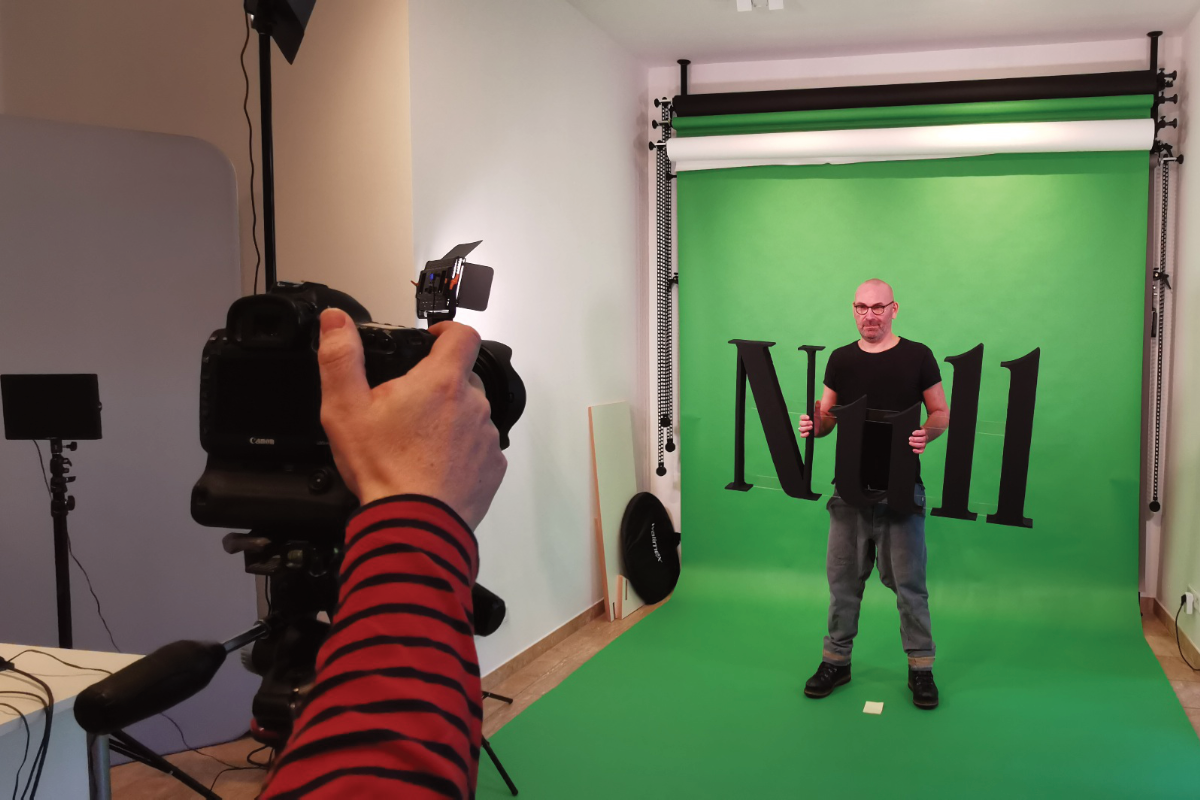
- To design the campaign page, VierNull produced a video with a production company, created an initial website layout with sample text, summarized their mission concisely, and prepared brief answers for an FAQ section.
- The team also set up a Facebook presence and produced initial articles to post during the crowdfunding campaign.
- A lot of work went into preparing mailing lists in advance. They organized all possible contacts in Excel to keep them sorted in one accessible place. This alone took about a week and, in hindsight, was one of the most important preparations according to Christian Herrendorf.
- Finally, the team determined the campaign duration (45 days) and the products offered: three one-month memberships (€8, €15, or €40) and three one-year memberships (€96, €180, or €480). There was also an option to make a free donation without receiving a reward.
- The crowdfunding campaign officially launched on March 26, 2021. Until then, the VierNull founders had kept their plans mostly secret. Once the campaign went live, VierNull began communicating actively, including via Facebook. The four founders invited thousands of people to follow the new page and sent out the first emails.
- During the campaign, Christian Herrendorf and his colleagues primarily focused on writing emails. They made sure not to send mass emails, but opted for a very personal approach, which was time-consuming.
- On Facebook, the team gradually published their first articles – posted directly rather than just linked. This generated a lot of interaction and reach for the page, and brought in new subscribers for the campaign.
The Result:
Satisfaction Level: High – The campaign goal was reached, and VierNull was able to launch.
- By early May, VierNull had raised €45,020 from 356 supporters. After deducting all fees for Startnext, roughly the targeted €40,000 remained. However, taxes will still be due on this amount, so the final sum will be somewhat lower. (Which taxes apply to crowdfunding can be complex and varies from case to case; Startnext provides some guidance on this.)
- The funds helped the four founders minimize the financial risks of launching VierNull, allowing the site to go live without any additional financing.
Lessons Learned:
- Crowdfunding is a full-time job: “We didn’t realize it beforehand, but anyone running a crowdfunding campaign has no time for anything else,” says Christian Herrendorf. Most of the time during the campaign was spent writing countless emails.
- A strong network is crucial: Christian Herrendorf and co-founder Hans Onkelbach were long-time editors and editorial managers at the Rheinische Post before starting VierNull. The network they had built over the years was extremely helpful for the crowdfunding campaign.
- Start with a big splash: The founders kept their plan under wraps until launch to leverage the surprise effect. Once the campaign page went live, they launched their marketing full-force. Around a quarter of the crowdfunding goal was reached within the first few days.
- Allow enough time for planning: Planning the crowdfunding campaign at VierNull took about a month. Delays occurred, for example, due to applying for a commercial register number (required for Startnext). It’s best to build in some buffer time.
- Be transparent: Why do you need the money? Why this exact amount? What is your idea? What makes you different? All these questions should be addressed repeatedly throughout the campaign. People tend to scrutinize crowdfunding campaigns closely, so maximum transparency from the start is essential.
- Convert crowdfunding participants later: Subscribers who join via crowdfunding may drop off after one month or one year. This means they need to be convinced to sign up for a regular membership. VierNull already reserved the first week of June 2022 for a follow-up campaign, as about a third of subscribers would lapse at once.
- Offer higher-tier packages: Crowdfunding carries a higher emotional intensity because it links a clear idea with a time-limited goal. Many participants are therefore willing to pay more. VierNull never sold the highest monthly or yearly packages again after the crowdfunding campaign, but these premium packages were purchased over 70 times during the campaign.
This case study first appeared in our beabee newsletter. In it, we share practical tips and guides once a month on how community journalism works. You can subscribe to the newsletter here: Sign up
Do you have your own experiences or use cases that we should include? Just send an email to svenja.schilling@correctiv.org.