

Convincing people to pay for something is always challenging. However, regularly acquiring new paying members is essential for a membership model. If organic growth is not enough, a membership campaign becomes necessary.
“The COVID-19 pandemic brought us more new members than any membership campaign ever could,” says Seraina Manser, Membership Manager at Tsüri.ch in Zurich. Many member-funded newsrooms experienced growth during the pandemic. Still, Tsüri.ch wanted more. To expand their team, Seraina and her colleagues planned a membership campaign with a special twist. In our beabee lunchbreak in mid-July, Seraina walked us through the process step by step.
Let’s start with an overview of Tsüri.ch:
- Tsüri.ch has existed since early 2015 and was founded as an experiment by students, originally intended to run for just two years. The project was so successful, however, that it continued.
- Tsüri.ch reports on local topics from Zurich for a young, left-leaning audience aged 20 to 40 who live in Zurich or the surrounding canton.
- Four times a year, Tsüri.ch holds focus months on a specific theme, most recently on civic engagement and activism. During the focus month, many articles on the topic are published on Tsüri.ch, and events such as panel discussions, meetups, and workshops are organized.
- Currently, Tsüri.ch has around 1,400 members, each paying an average of €90 per year.
- Membership fees alone do not cover Tsüri.ch’s funding. The largest share of revenue comes from sponsorships for the focus months. The third major source is traditional advertising such as promotions, giveaways, or banner ads. Additionally, the shop with branded merchandise brings in around €3,500 per month.
- The Tsüri team consists of ten employees. The unique aspect: regardless of whether they are the editor-in-chief, membership manager, or programmer, everyone earns the same salary.
What Membership Campaigns Are About
- Membership campaigns are designed to attract new members and can be structured in various ways. Many member-funded organizations plan at least one campaign per year. Tsüri.ch also regularly runs smaller or larger membership campaigns.
- Tsüri.ch’s current Climate Membership Campaign was partly inspired by the ambassador campaign of Zetland from Denmark.
- In 2019, Zetland asked its members to recruit new members. Within one month, Zetland increased its membership by 25 percent. You can read more about how Zetland’s campaign worked on the Membership Puzzle Project.
- Zetland tied its membership campaign to a warning that the organization would fail without new members. Tsüri.ch took a different approach, linking its campaign to the vision of growth. How exactly Tsüri.ch’s campaign worked will be explained in the next chapter of this newsletter.
Tsüri.ch’s Climate Membership Campaign
- Tsüri.ch’s Climate Membership Campaign started with a preliminary awareness campaign: in a series of articles, the newsroom explained Tsüri.ch’s financial situation, why local journalism is essential, and how difficult it had been so far to attract new members.
- The actual membership campaign came in the second step. The goal was clear: 1,000 new members to fund a new full-time editorial position.
- Tsüri.ch let members decide via a survey which topic the new editor should focus on. Options included the climate crisis, gender inequality, the right to the city (housing policy), and local politics. Most members voted for the climate crisis.
- In the next step, Tsüri.ch recruited ambassadors to bring in new members, also using a survey. The first question—whether the respondent was already a member – already generated new members. In total, 60 ambassadors signed up, each indicating they could recruit about five new Climate Members.
- Ambassadors received promotional materials and a personalized link to recruit new members. This allowed Tsüri.ch to track who recruited how many members. However, not all ambassadors consistently used the link.
- Prior to the campaign, the team also met with organizations that have long been involved with the climate crisis, such as Fridays for Future and Critical Mass Zurich. These organizations promoted the campaign within their own communities.
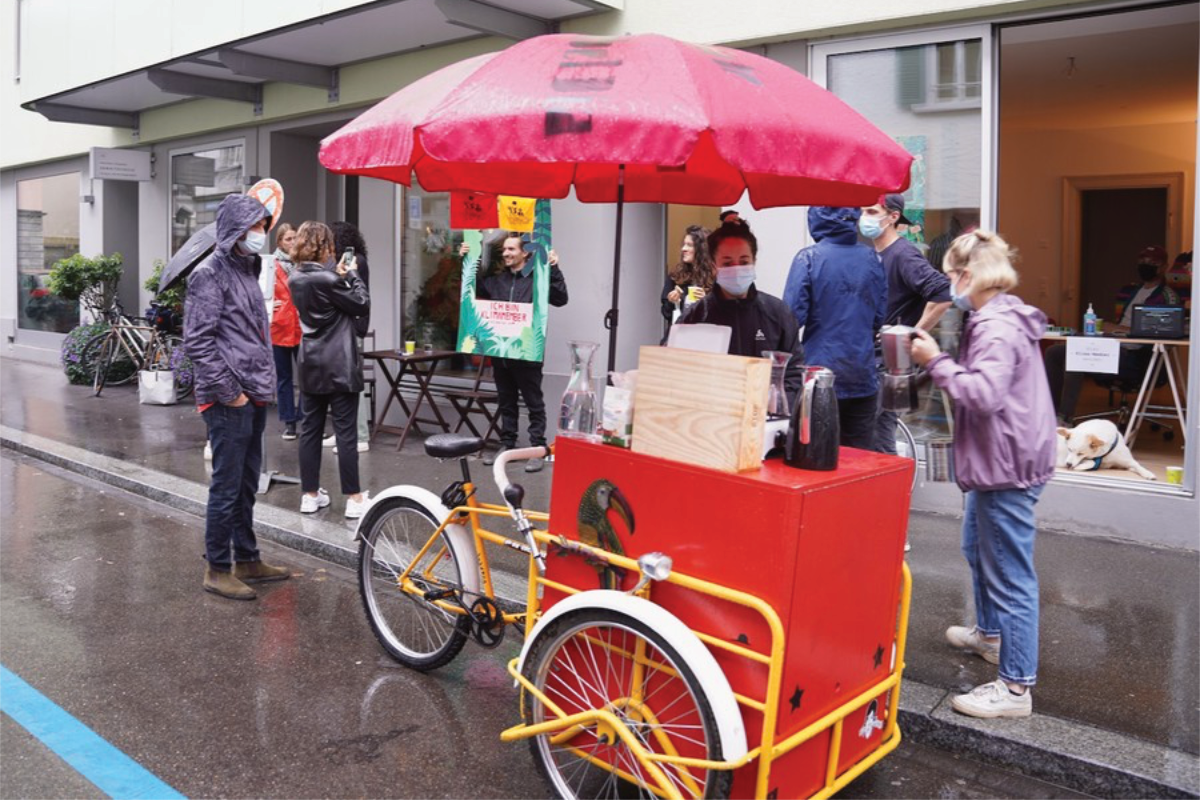
- The campaign kick-off took place on June 7 at the Tsüri newsroom: new Climate Members could register on site over coffee and croissants. Here’s how Tsüri invited people to the kick-off.
- The campaign ran for one month. During this time, the newsroom continuously promoted membership and motivated ambassadors, who were closely supported by the team and regularly updated on the campaign’s progress.
- By the end of the campaign on July 7, three different public figures had addressed the Tsüri community with an open “letter”: Anja Gada from the climate strike, City President Corine Mauch, and urban researcher Sabeth Tödli. Additionally, Tsüri.ch published further content on the climate crisis, and in a video, Editorial Director Rahel Bains and Editor-in-Chief Simon Jacoby explained the purpose of the new climate editorial position.
- The membership campaign also caught the attention of a climate foundation, which pledged around €30,000 in funding for the new editorial position.
The Result
Satisfaction level: medium – Seraina from Tsüri.ch is generally satisfied with the outcome of the membership campaign but had hoped for a few more new members.
- The 60 ambassadors recruited a total of around 250 new members, far fewer than the hoped-for 1,000. However, it was clear from the start that the goal was very ambitious.
- The foundation’s donation was also converted into members, bringing the total to roughly 500 Climate Members.
- This allows Tsüri.ch to fund at least a 50-percent position for an editor who will focus exclusively on the climate crisis.
Lessons Learned
- A membership campaign is hard work: In total, three team members from Tsüri.ch spent more than three months working on the campaign. While they were not working on it full-time around the clock, Seraina estimates that the combined effort roughly equaled one full-time position. Most of the time went into writing and sending the campaign newsletters.
- Ambassador campaigns pay off only above a certain size: Because it requires so much work, an ambassador campaign is only worthwhile if it reaches a certain scale. The smaller the membership base, the smaller the campaign’s impact. A large portion of the work remains the same, however. Surprisingly, even non-members signed up as ambassadors, and many of them became new members first.
- A thematic focus is helpful: By linking the ambassador campaign to funding a climate editorial position, Tsüri.ch could clearly communicate why new members were needed. This made certain communities (for example, Fridays for Future or cycling activists from Zurich) feel directly addressed, enabling better involvement and contributing to the campaign’s reach. In hindsight, it is also easier for Tsüri.ch to explain the impact that new members have with their contributions.
- Visibility is also valuable: The Climate Membership Campaign not only brought new members to Tsüri.ch but also attention. The large donation from a climate foundation would not have been possible without the campaign and its thematic link.
This case study first appeared in our beabee newsletter. In it, we share practical tips and guides once a month on how community journalism works. You can subscribe to the newsletter here: Sign up
Do you have your own experiences or use cases that we should include? Just send an email to svenja.schilling@correctiv.org.